Modern Smart Factory Workflow Management: Mastering Material, Resource, and Data Flow
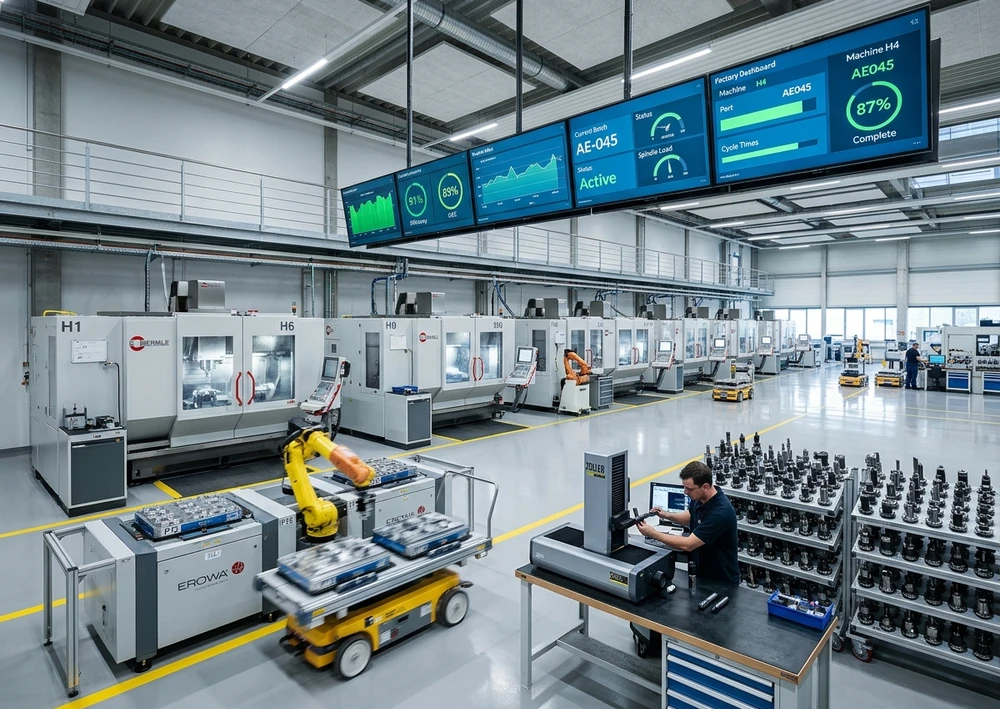
Chapter 1 of The Art & Science of 5-Axis Machining (pp. 16–18) opens with a foundational insight for modern manufacturing leaders: “Modern milling can no longer be described simply as cutting metal—it is the orchestrated interaction of every connected workflow across the factory.” All too often, a shop invests heavily in a flagship 5-axis machining center only to discover that the spindle cuts chips less than 40% of the shift because the operator is waiting on raw stock preparation, hunting for collets, or debugging setup sheets.
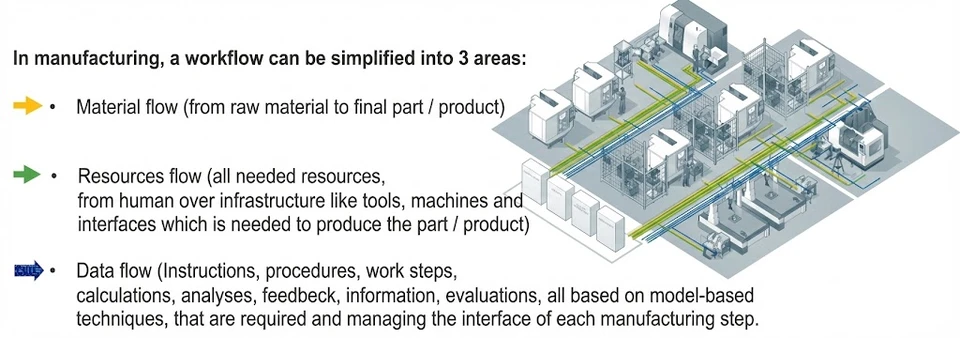
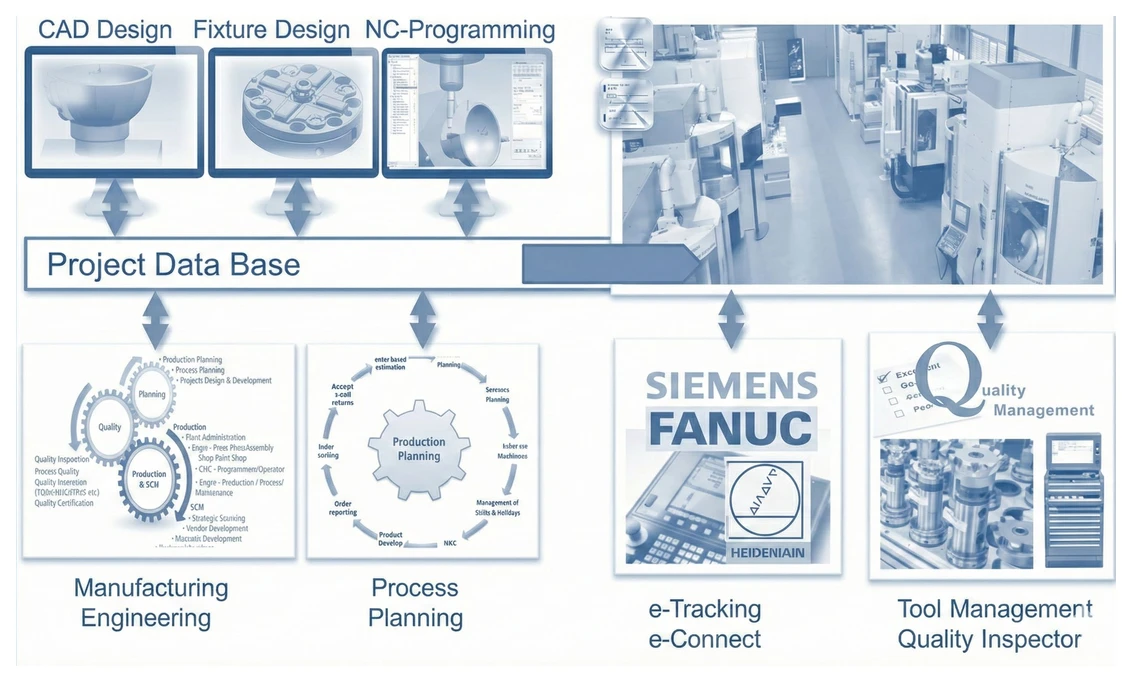
Transforming a traditional machine shop into a high-utilization Smart Factory requires synchronizing three distinct, interlocking operational streams: 1) Material Flow, 2) Resource Flow, and 3) Data Flow.
The Three Interlocking Flows of a High-Performance 5-Axis Factory
Material Flow: The physical journey of the workpiece from raw stock preparation and offline zero-point pallet clamping to 5-axis machining, deburring, and final QA.
Resource Flow: The closed-loop logistics of cutting tools, balanced holders, modular fixtures, offline presetting, and metalworking fluids.
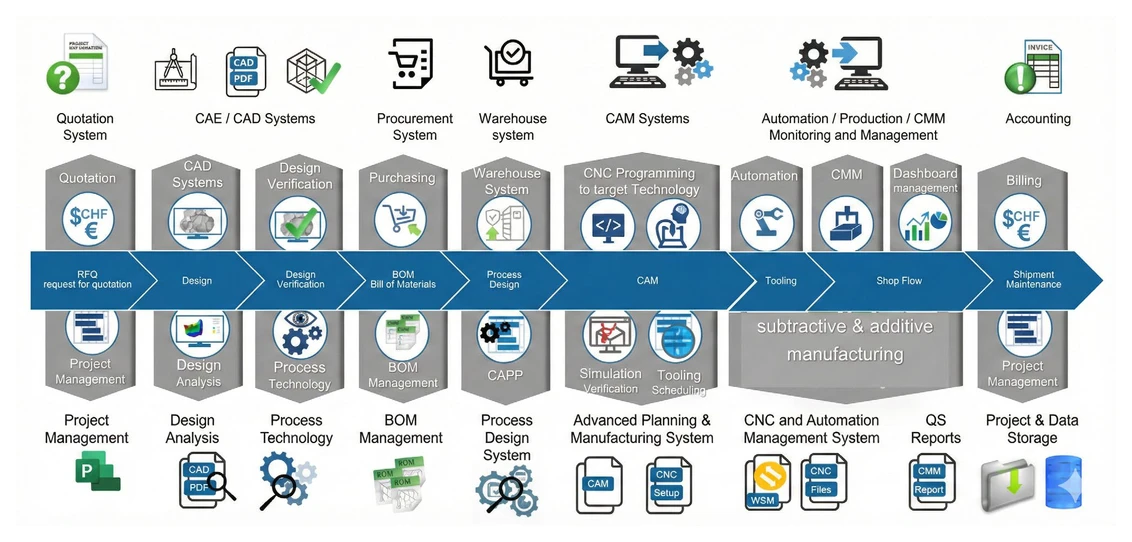
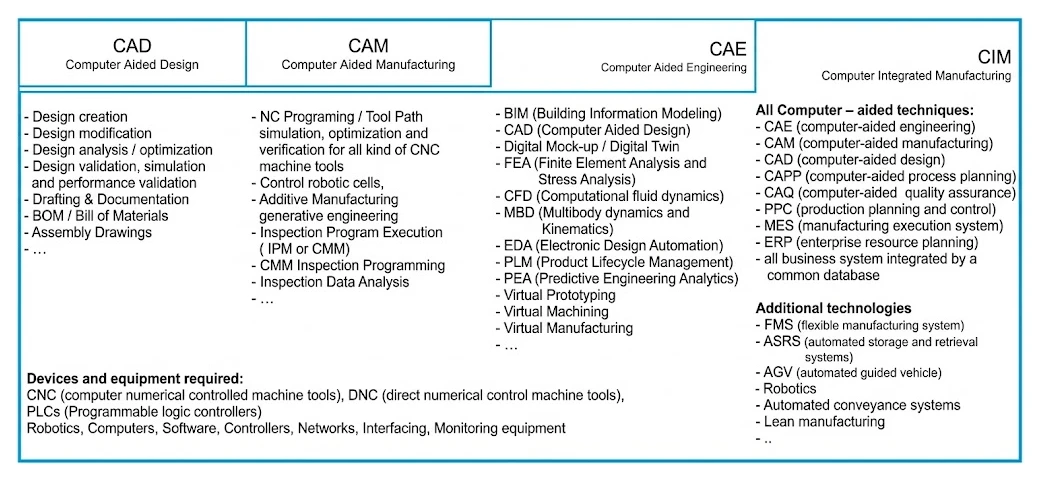
Data Flow: The bidirectional digital thread connecting 3D CAD, standardized CAM templates, Digital Twin verification, DNC transfer, and shop-floor feedback.
Because 5-axis machining consolidates multiple operations and slashes cycle times, it places far higher demands on shop-floor logistics than conventional 3-axis milling. For the spindle to cut continuously, three streams—the prepared raw stock (Material Flow), the pre-measured cutting tools and fixtures (Resource Flow), and the verified NC program and setup documentation (Data Flow)—must converge at the machine enclosure before the current cycle finishes.
The core management discipline is externalizing setup tasks (SMED — Single-Minute Exchange of Die):
While the spindle is actively cutting Part A, operators clamp Part B onto a zero-point pallet offline, shrink-fit and preset tooling assemblies in the tool room, and stage verified G-code via the shop network.
Changeover inside the machine cabin drops from hours to minutes, elevating spindle utilization from industry averages of ~35–45% up to 80–90%.
2. Material Flow: Streamlining the Physical Journey from Raw Billet to Certified Part
As defined in Chapter 1, Section 1.1 (p. 17), Material Flow encompasses the entire physical path of the product through the factory. Optimizing Material Flow for 5-axis production involves standardizing five sequential stages:
Raw Stock Preparation & Interface Pre-Machining: Sawing billets to standardized blank sizes and pre-machining dovetail profiles or threading pull-stud holes on an inexpensive 3-axis prep mill so the 5-axis spindle never wastes time squaring raw stock.
Offline Zero-Point Clamping: Mounting prepared blanks onto self-centering 5-axis vises or zero-point pallets at an ergonomic offline setup station.
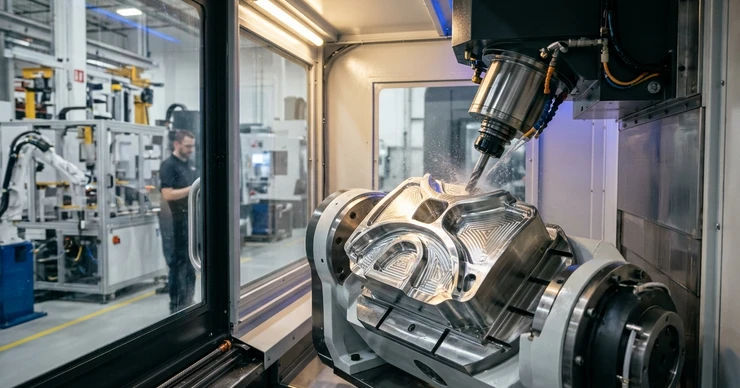
5-Axis Machining & Segregated Swarf Evacuation: Loading pallets into the machining center (manually or via an automated pallet pool) while continuously evacuating and segregating metal chips (keeping Titanium, Aluminum, and Stainless swarf separate to maximize scrap resale value).
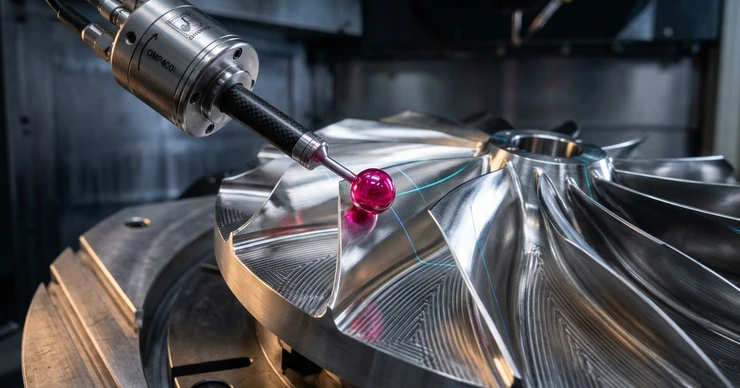
Final CMM Certification & Protective Packaging: Climate-controlled dimensional inspection and corrosion-protected packaging.
3. Resource Flow: Closed-Loop Tooling, Holders, Fixtures, and Fluid Logistics
While Material Flow follows the product shipped to the customer, Resource Flow (Section 1.2, p. 17 & pp. 53–55) governs the closed-loop circulation of production assets inside the facility:
Closed-Loop Cutting Tool & Holder Logistics: Encompasses inventory dispensing, assembly into shrink-fit or hydraulic holders, TIR runout and G2.5 balance verification, optical presetting, loading into the machine tool changer, post-job wear inspection, and reconditioning.
Modular Workholding & Fixture Readiness: Organizing zero-point risers, jaws, and pull studs with clear identification so physical setups match virtual CAM assemblies identically.
Metalworking Fluid & Consumables Management: Automated deionized water mixing, fine filtration, tramp-oil skimming, and concentration/pH monitoring to keep high-pressure coolant systems running trouble-free.
4. Data Flow: Standardized Templates, Digital Setup Sheets, and Closed-Loop Feedback
Acting as the central nervous system of the smart factory is Data Flow (Section 1.3, p. 18 & Practical Recommendations, p. 77). In poorly organized shops, critical feedrate tweaks and offset adjustments made at the machine console stay trapped inside the operator’s notebook or local CNC memory—forcing the shop to reinvent the wheel when a repeat order arrives six months later.
Building a bulletproof 5-axis Data Flow relies on three practical pillars:
Standardized CAM & Setup Templates (p. 77): Create pre-validated templates for standard vise/zero-point configurations, permanent magazine tool tables, and proven roughing/finishing cycles—cutting programming time by 40–60% while eliminating human oversight.
Unified Digital Twin Tool Library: Maintain a single master database containing exact 3D collision models, gauge lengths, and material-specific cutting speeds/feeds shared across CAD/CAM, verification software, and the tool presetter.
Closed-Loop Shop-Floor Feedback: Establish a strict protocol to capture any shop-floor program optimizations, probing results, and tool-life adjustments back into the master CAM project so institutional knowledge compounds over time.