TH

Advanced Machining for Specialized Industries: 5-Axis Strategies for Aerospace, Space, and Medical Components

Advanced Machining for Specialized Industries: 5-Axis Strategies for Aerospace, Space, and Medical Components

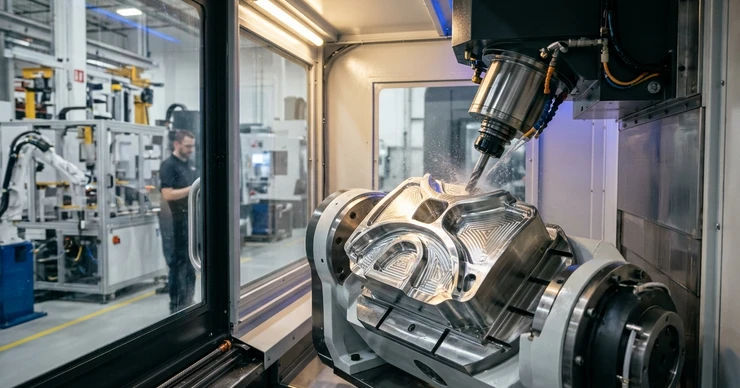
Aerospace, Space Exploration, and Medical Device Manufacturing represent the pinnacle of modern 5-Axis CNC Machining. Components in these mission-critical sectors demand far more than tight dimensional tolerances—they require complex 3D freeform aerodynamics or anatomical geometries, exotic biocompatible or heat-resistant alloys, flawless surface integrity, and strict regulatory compliance under AS9100 and ISO 13485.

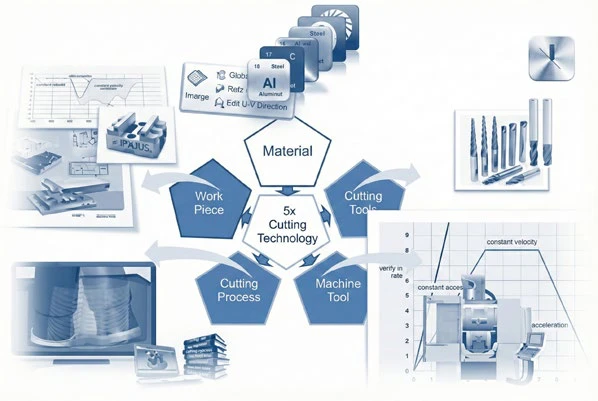
Grounded in Chapter 6 and Appendices A13–A14 of The Art & Science of 5-Axis Machining, achieving competitive cycle times and zero-defect quality on specialized parts requires combining smooth simultaneous 5-axis kinematics with revolutionary Circle-Segment (Barrel) cutting tools and tailored HSC, HPC, and HDC toolpath strategies.
Advanced 5-Axis and Hybrid Manufacturing Solutions for Aerospace and Medical Industries

Key Strategies for Aerospace, Space, and Medical 5-Axis Machining

  • Turbomachinery (Impellers & Blisks) and Monolithic Airframes: Continuous 5-axis tool-vector interpolation through deep, twisted flow channels and thin-wall structural ribs.
  • Orthopedic Implants & Surgical Instruments: Mirror-grade articulating surfaces on Ti-6Al-4V ELI, CoCrMo, and PEEK with strict medical cleanliness protocols.
  • Circle-Segment (Barrel / Lens / Oval) Tool Geometry: Achieving an effective cutting radius up to 1,000 mm to slash finishing cycle times by up to 80%.
  • Matching HSC, HPC, and HDC to Machine Architecture: Aligning cutting dynamics with Gantry, Swivel-Head, and Trunnion kinematics.

1. Aerospace & Space Strategies: Impellers, Blisks, and Monolithic Thin-Wall Structures

Aerospace 5-axis applications fall into two primary categories with distinct kinematic demands: high-speed turbomachinery components (Impellers, Blisks, and Turbine Blades) and monolithic structural airframe components.

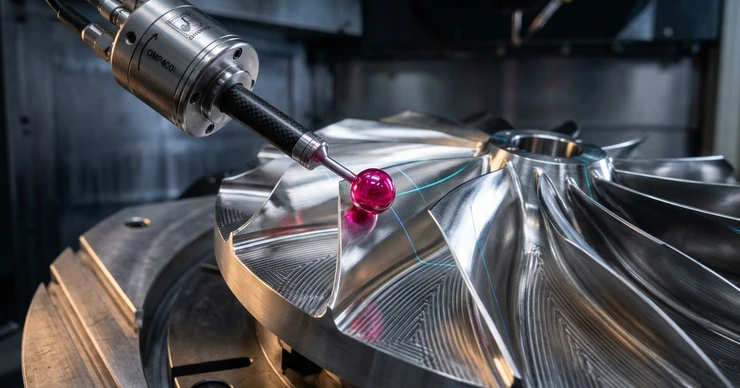
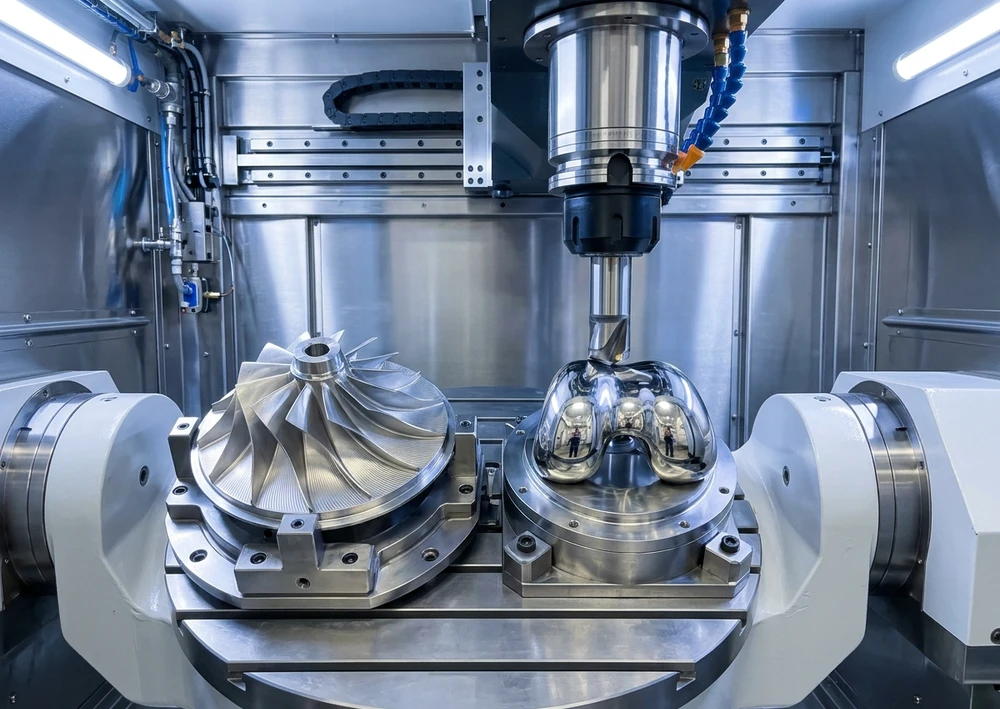
  • Impellers and Blisks (Bladed Disks): Characterized by deeply twisted, overlapping aerodynamic blades and narrow splitter channels, these parts require ultra-smooth simultaneous 5-axis tool-axis tilting to prevent shank/holder collisions against adjacent blades. Programmers utilize progressive shroud-to-hub step-down finishing so the uncut root stock supports the thin blade wall directly beneath the cutting zone.
  • Monolithic Thin-Wall Airframe Ribs (Buy-to-Fly Ratio > 90%): Machined from solid aerospace aluminum (7050/7075) or titanium billets where over 90% of the raw material is converted into chips, leaving walls as thin as 0.8–1.5 mm. Preventing wall flutter and residual-stress warping requires alternating step-down passes on both sides of the rib and supporting corners with smooth trochoidal transitions.
High-precision 5-axis machined aerospace impeller and complex freeform components

2. Medical & Dental Precision: Orthopedic Implants, Biocompatible Alloys, and Cleanliness

Medical components—such as femoral knee implants, acetabular hip cups, trauma bone plates, spinal cages, and dental prosthetics—combine organic anatomical freeform surfaces with challenging biocompatible materials including Ti-6Al-4V ELI, Cobalt-Chrome-Molybdenum (CoCrMo), medical-grade stainless steel, PEEK, and Zirconia.

As detailed in the Application-Specific Requirements table in Appendix A13 (p. 193), medical 5-axis machining demands strict adherence to three engineering pillars:
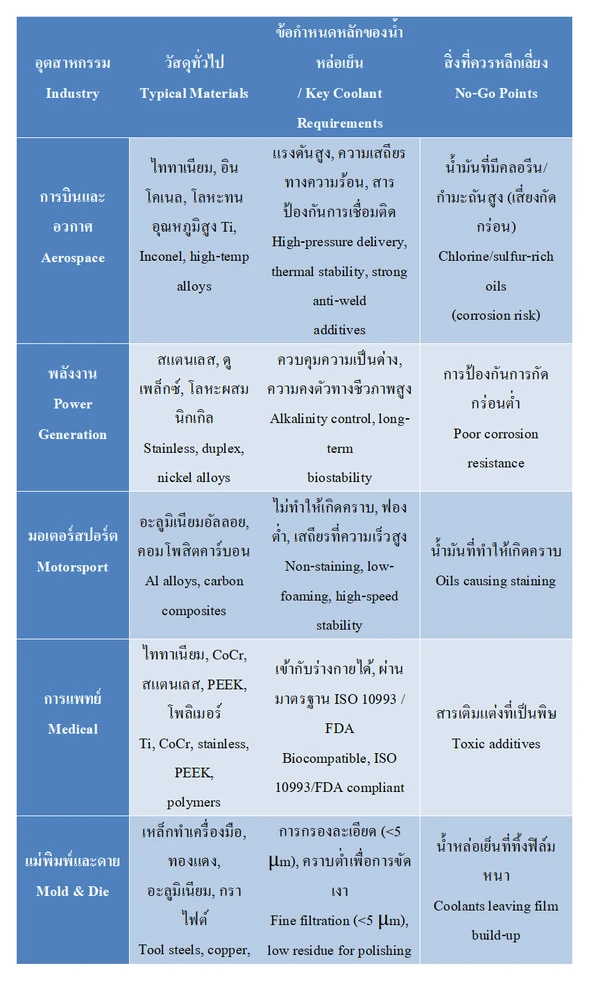
  1. Mirror-Grade Articulating Surfaces ($R_a < 0.1\text{–}0.2\ \mu\text{m}$): Bearing surfaces on knee condyles and hip heads must be free of witness marks or facets to prevent polyethylene liner wear inside the human body. Continuous 5-axis surface-normal toolpaths drastically reduce downstream manual polishing.
  2. Biocompatible Coolant & Residue-Free Washability: Cutting fluids must be free of toxic additives, prevent cobalt leaching when machining CoCr alloys, and rinse off completely during validated ultrasonic cleaning.
  3. Validated Process Repeatability (ISO 13485): Tool wear and probing offsets must be tightly controlled so every implant meets validated quality protocols.
Industry-specific 5-axis machining and coolant requirements for aerospace, medical, and precision mold applications

3. Revolutionizing 5-Axis Finishing with Circle-Segment (Barrel) Cutting Tools

When finishing 3D sculpted surfaces with a conventional Ø10 mm ball-nose end mill, the effective profiling radius is limited to $R = 5\ \text{mm}$. Achieving a fine theoretical cusp height ($R_{\text{th}}$) forces programmers to use microscopic radial stepovers ($a_e = 0.1\text{–}0.2\ \text{mm}$), resulting in multi-hour finishing cycles.

Chapter 6 (pp. 63–64) highlights one of the greatest productivity breakthroughs enabled exclusively by simultaneous 5-axis tilting: Circle-Segment Cutters (Barrel, Tangent, Oval, and Lens form tools):
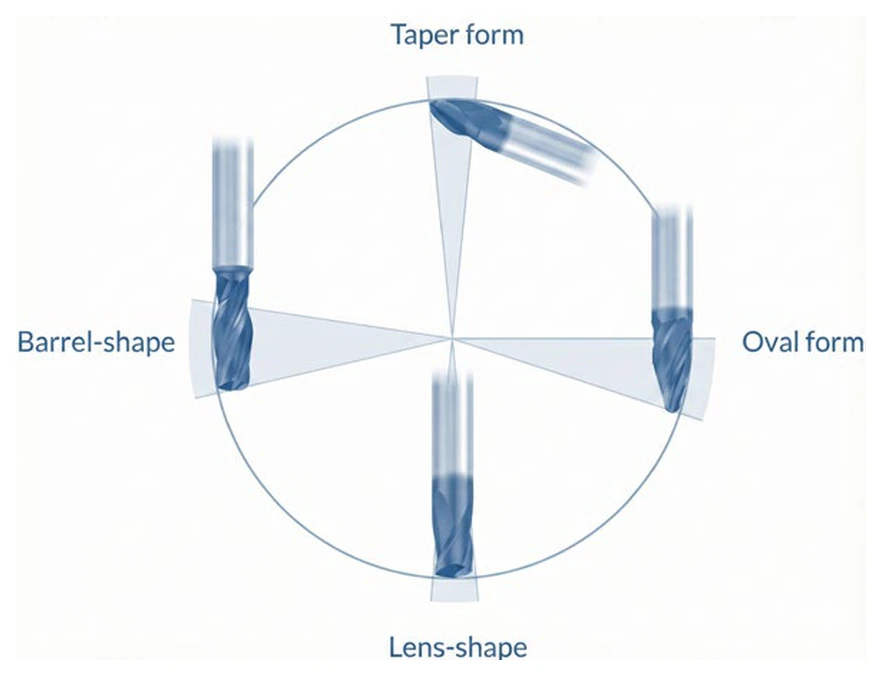
  • While the tool shank remains a compact Ø10–12 mm, the ground peripheral arc presents an effective cutting radius ($R_{\text{eff}}$) ranging from 250 mm up to 1,500 mm to the workpiece surface.
  • Because theoretical cusp height follows $R_{\text{th}} \approx \frac{a_e^2}{8 R_{\text{eff}}}$, increasing $R_{\text{eff}}$ by 100× allows programmers to increase stepover ($a_e$) by 5× to 10× while simultaneously achieving a smoother surface finish!
  • Cycle times for finishing aerospace turbine blades, blisks, and medical implants are routinely slashed by 70% to 85%.
Multi-axis cutting tool geometry showing Circle-Segment and Barrel cutters with large effective radius

4. Matching HSC, HPC, and HDC Strategies to 5-Axis Machine Architectures

Appendix A14 (pp. 206–218) provides a comprehensive framework for matching the three modern milling strategies—HSC, HPC, and HDC—to specific 5-axis machine kinematics and specialized aerospace/medical components:

Milling StrategyCutting Parameter ProfileIdeal Aerospace & Medical Application
HSC (High-Speed Cutting)High spindle RPM and feedrate with shallow axial ($a_p$) and radial ($a_e$) depthsUltra-fine 5-axis surfacing of orthopedic implants, turbine blades, and thin-wall ribs with minimal cutting pressure.
HPC (High-Performance Cutting)Maximum Metal Removal Rate (MRR) utilizing high spindle torque and structural rigidityHeavy roughing of structural aerospace Ti/Al billets on rigid Gantry or Swivel-Head machining centers.
HDC (High-Dynamic Cutting)Constant-engagement trochoidal paths with full flute depth ($a_p = 2\times D$) and low radial width ($a_e$)High-stability roughing and semi-finishing of deep pockets in Titanium, Inconel, and CoCr on agile Trunnion machines.

Combining HPC/HDC for rapid, stress-free stock removal with 5-axis HSC and Circle-Segment tooling for finishing creates an unbeatable production workflow for high-value specialized industries.
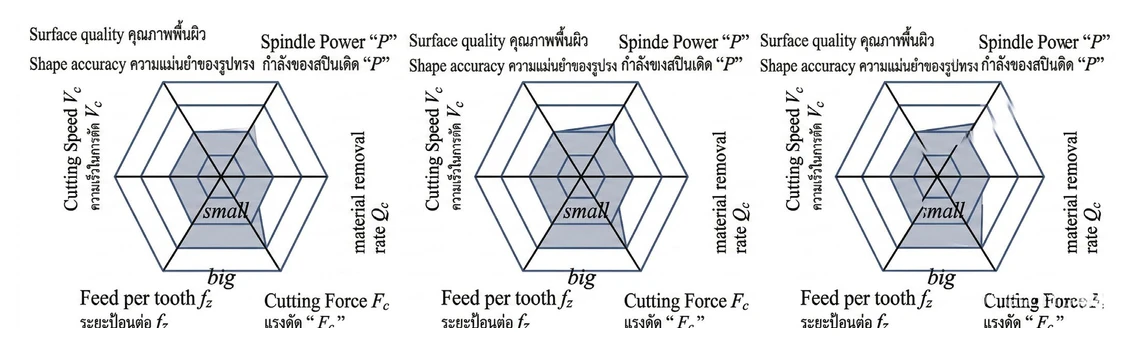
Comparison chart of HSC, HPC, and HDC 5-axis milling strategy characteristics and application focus