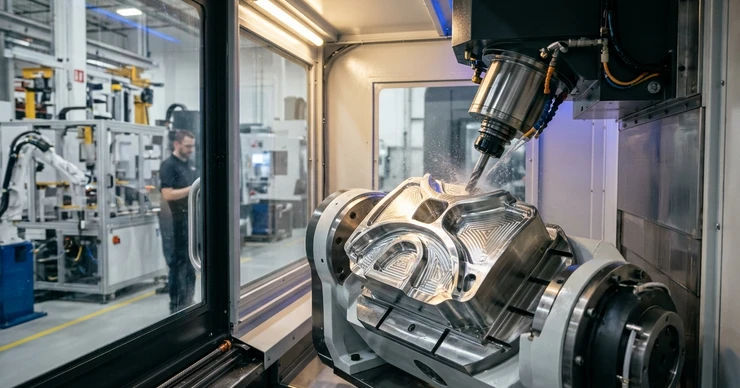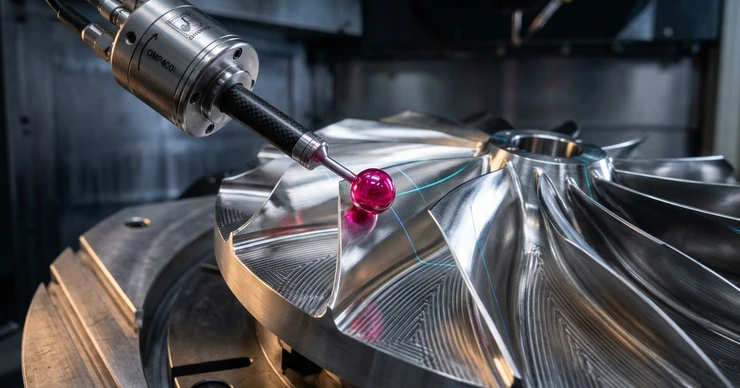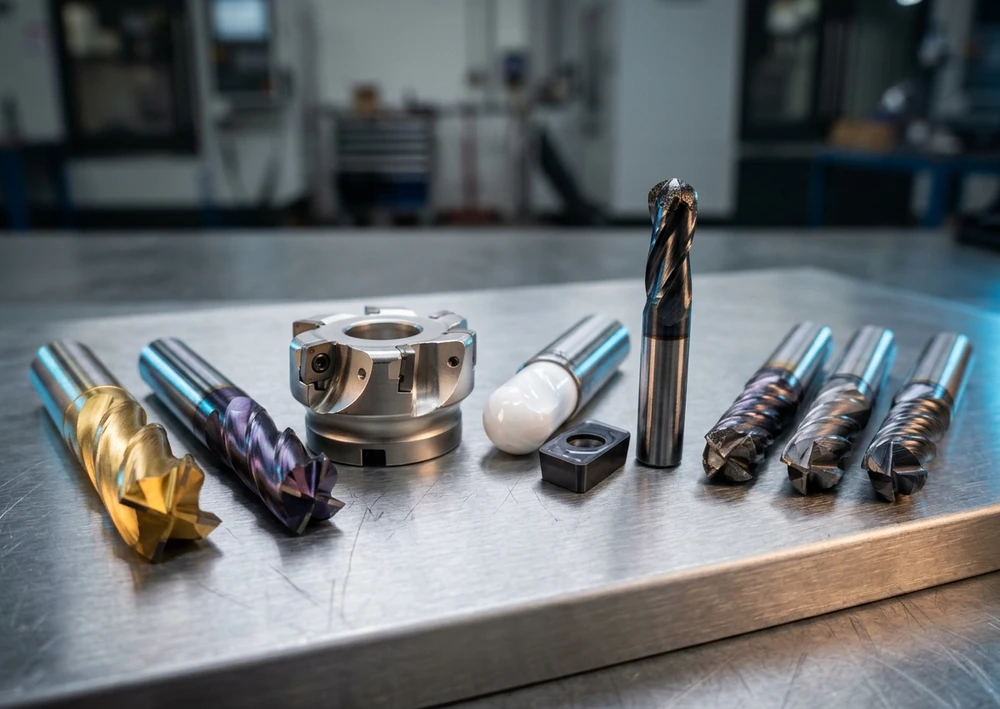
Even the most advanced multi-million-baht 5-Axis CNC Machining Center is ultimately only as productive as the final few millimeters of its cutting edge. Selecting the wrong cutting tool substrate or coating for a given workpiece material and 5-axis engagement strategy leads directly to premature flank wear, thermal cracking, chatter, and lost spindle hours.
Drawing directly from Chapter 9 (Cutting Materials & Coatings, pp. 107–117) of The Art & Science of 5-Axis Machining, this comprehensive guide compares the four primary families of high-performance cutting tool materials—Solid Carbide, Cermet, Advanced Ceramics, and Super-Hard Diamond (PCD) / Cubic Boron Nitride (CBN)—alongside PVD vs. CVD coating technologies and a recommended 5-axis starter kit.
The foundational law of cutting tool metallurgy illustrated in Chapter 9 (pp. 107–108) is the inverse relationship between Hardness (Wear Resistance / Hot Hardness) and Toughness (Transverse Rupture Strength / Impact Resistance) across the material spectrum from HSS → Solid Carbide → Cermet → Ceramic → CBN → Diamond (PCD):
Successfully applying ultra-hard substrates in 5-axis milling therefore demands rigid spindle interfaces, sub-3 µm tool holder runout, and smooth constant-load CAM toolpaths.
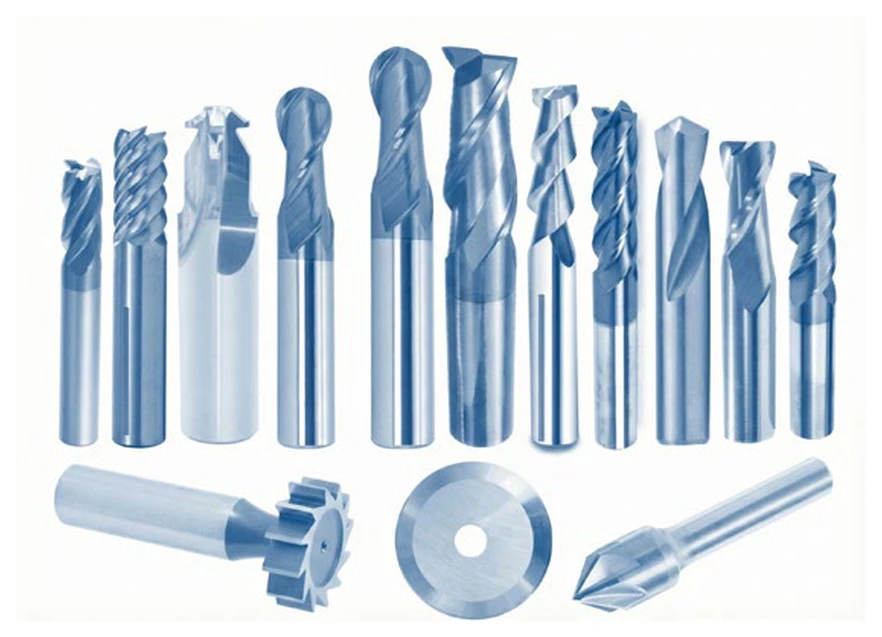
1) Solid Carbide (WC-Co — p. 109): Sintered via powder metallurgy, cemented carbide combines hard Tungsten Carbide ($\text{WC}$) grains within a ductile Cobalt ($\text{Co}$) metallic binder matrix:
2) Cermet (Ceramic + Metal — p. 110): Built on titanium carbide ($\text{TiC}$) and titanium carbonitride ($\text{TiCN}$) hard phases bound with Nickel-Cobalt. Because $\text{TiCN}$ exhibits extremely low chemical affinity toward iron, Cermet resists diffusion wear and built-up edge (BUE), making it an exceptional choice for high-speed semi-finishing and mirror finishing of carbon steels, alloy steels, and stainless steels.
When applications exceed the thermal or abrasive limits of tungsten carbide, Chapter 9 (pp. 111–112) details two advanced material classes:
| Material Class | Sub-Types & Key Properties | Target Applications & Critical Restrictions |
|---|---|---|
| Cutting Ceramics | Oxide ($\text{Al}_2\text{O}_3$), Silicon Nitride ($\text{Si}_3\text{N}_4$), SiAlON, and Whisker-Reinforced Ceramics | High-speed roughing of Inconel 718 / HRSA and cast iron at 500–1,000 m/min—using localized shear-zone heat to plasticize and strip superalloy stock at 10× carbide speeds. |
| Cubic Boron Nitride (CBN) | Second hardest material known; thermally stable up to 1,200 °C and chemically inert against ferrous metals | High-precision 5-axis hard milling of hardened tool and die steels (55–68 HRC), replacing slow EDM and manual bench grinding. |
| Diamond (PCD / CVD-D) | Polycrystalline Diamond; highest hardness and abrasion resistance of any material | Unbeatable tool life in abrasive Al-Si alloys, copper, brass, graphite electrodes, CFRP composites, and green ceramics. *Strict Rule: Never use PCD on steel, stainless, or superalloys due to rapid chemical carbon diffusion into iron!* |
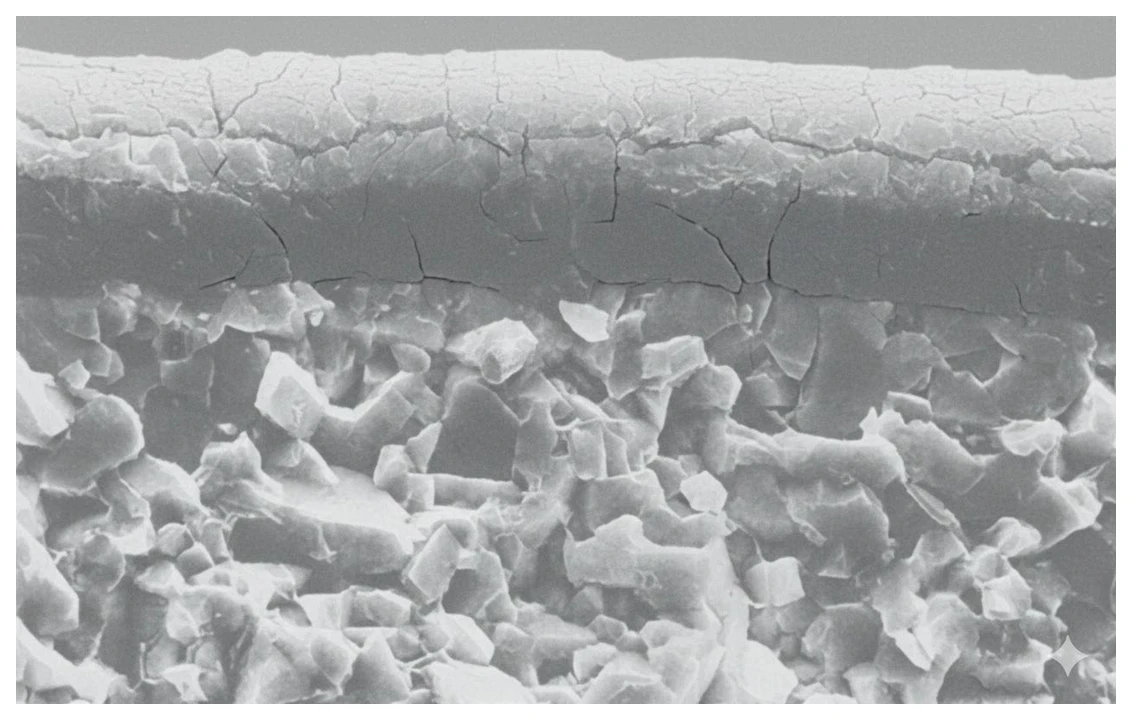
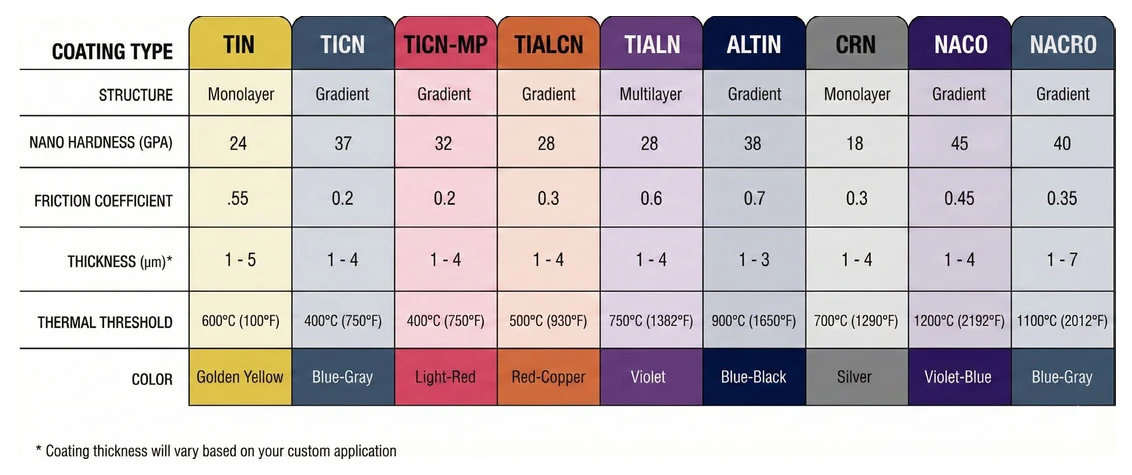
Over 90% of modern carbide tools rely on engineered surface coatings (2–15 µm thick) to act as thermal barriers and solid lubricants. Chapter 9 (pp. 113–117) contrasts the two primary coating processes:
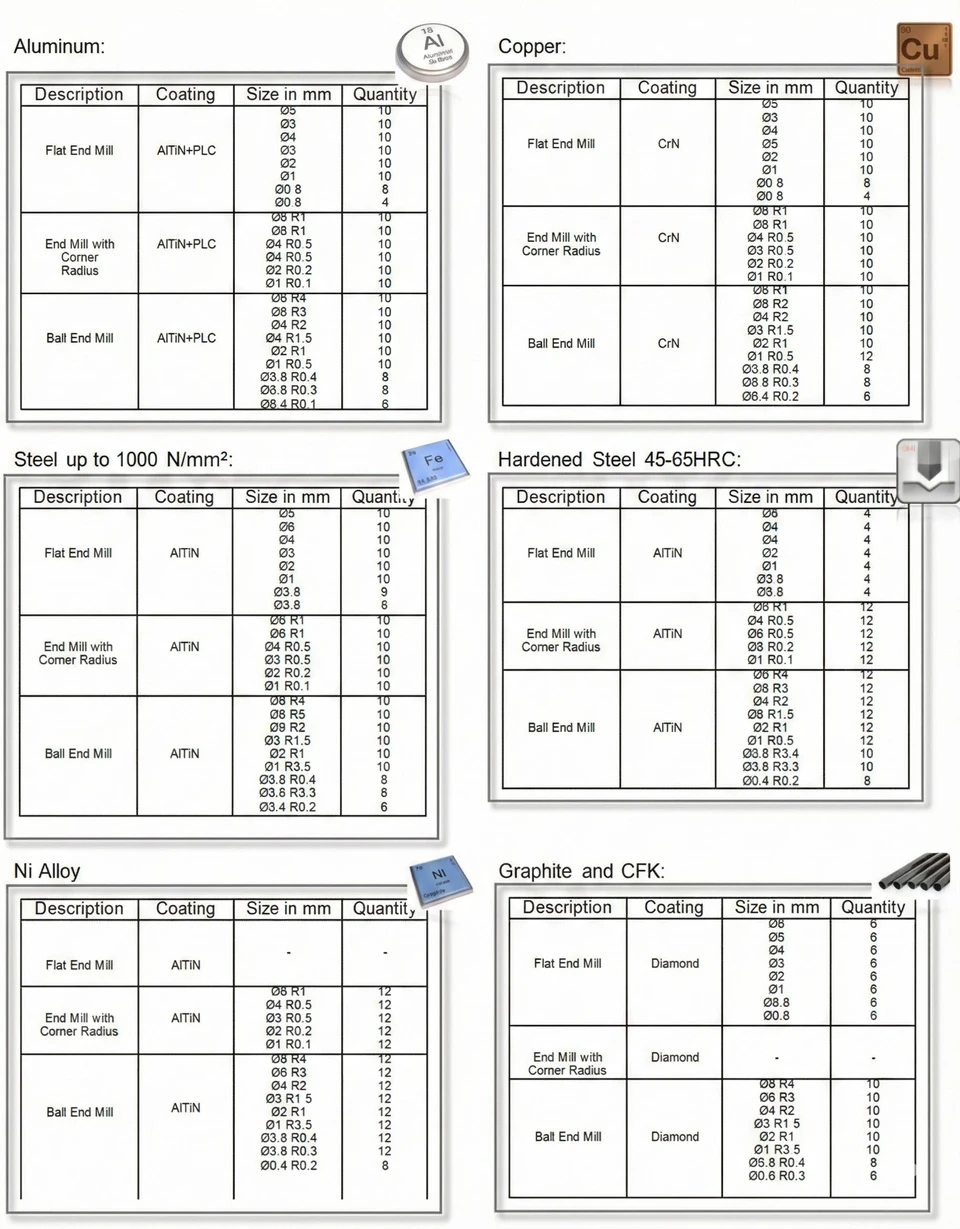
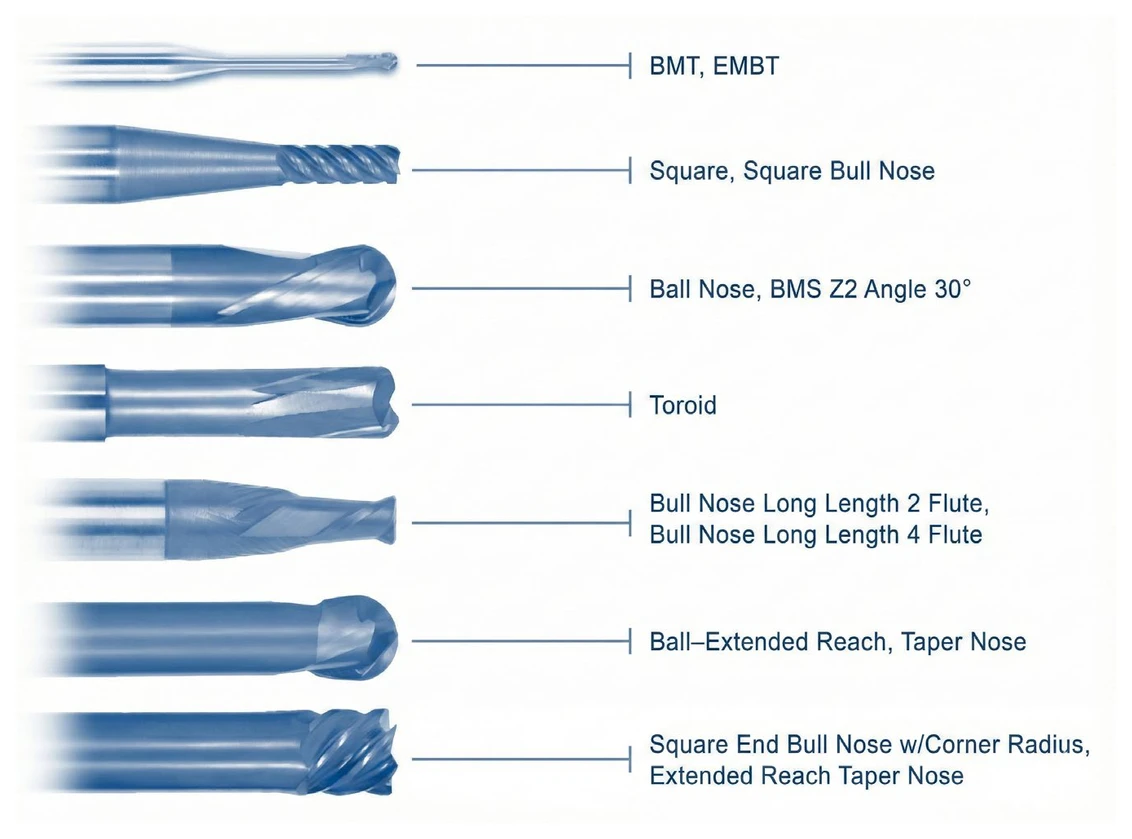
TiAlN / AlTiN (steels & titanium), AlCrN (heavy thermal shock), TiSiN (hardened steels), and non-stick DLC / TiB2 / ZrN (aluminum & non-ferrous alloys).Finally, pages 116–117 provide a practical Recommended Solid Carbide Cutting Tool Starter Kit—standardizing on a core matrix of torus (bull-nose), ball-nose, 3-flute polished aluminum cutters, and 5/6-flute variable-helix HDC steel/titanium cutters so shops can cover 90% of 5-axis applications with lean tooling inventory.
© 2022 Machine Tech Co., Ltd. All Rights Reserved. Web design by 1001click.