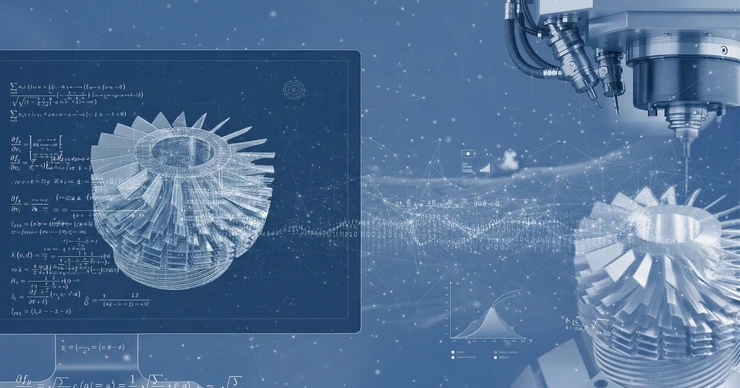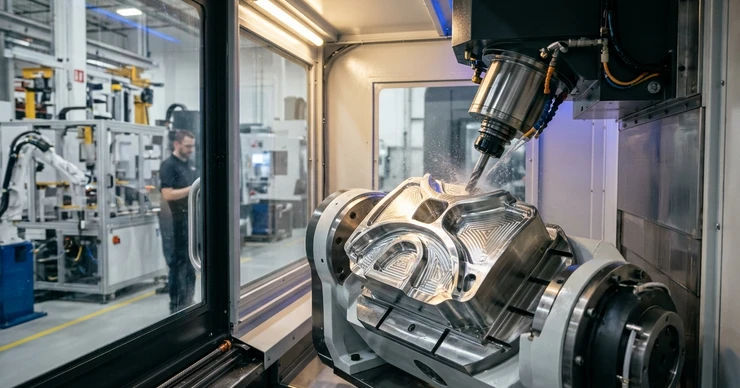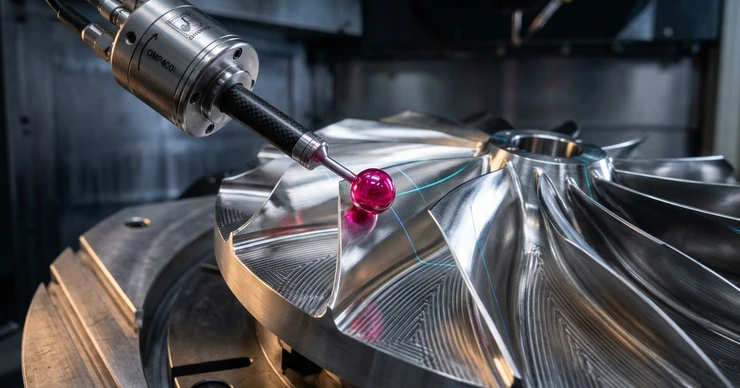
In modern smart factories striving for predictable delivery and unattended Lights-Out Machining, peak burst speed means very little without Process Stability. A stable 5-axis machining process is one in which cutting forces, thermal loads, chip evacuation, and tool wear progress smoothly and predictably—eliminating sudden catastrophic tool breakage, harmonic chatter, and dimensional drift to achieve true Zero-Defect Manufacturing.
Synthesizing insights from Chapters 6 and 11 and Appendices A13–A14 of The Art & Science of 5-Axis Machining, process stability is engineered long before the cycle-start button is pressed. It requires front-loaded feasibility validation, harmonizing the four physical pillars of machining, deploying constant-chip-load toolpaths, and damping structural vibrations.
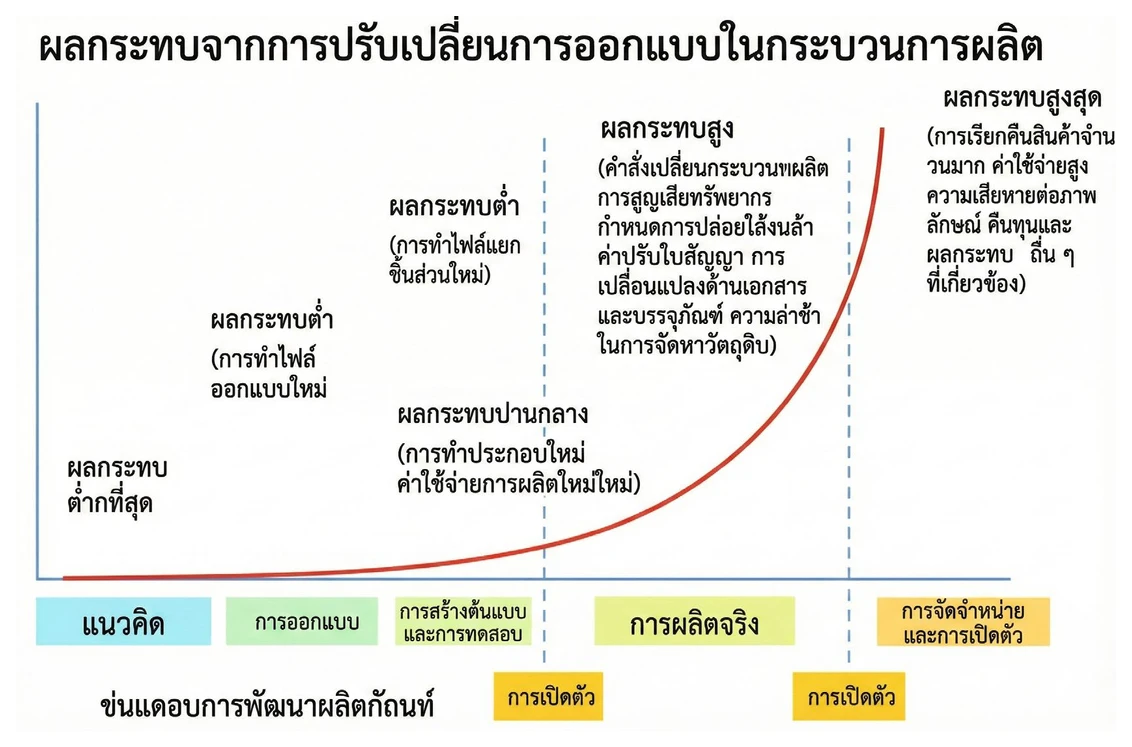
A foundational principle highlighted in Chapter 6 (p. 52) of The Art & Science of 5-Axis Machining is the Cost of Change Curve (The Rule of 10): “The earlier a design or process flaw is discovered, the lower the cost of correction; the later it is found, the more exponentially expensive it becomes.”
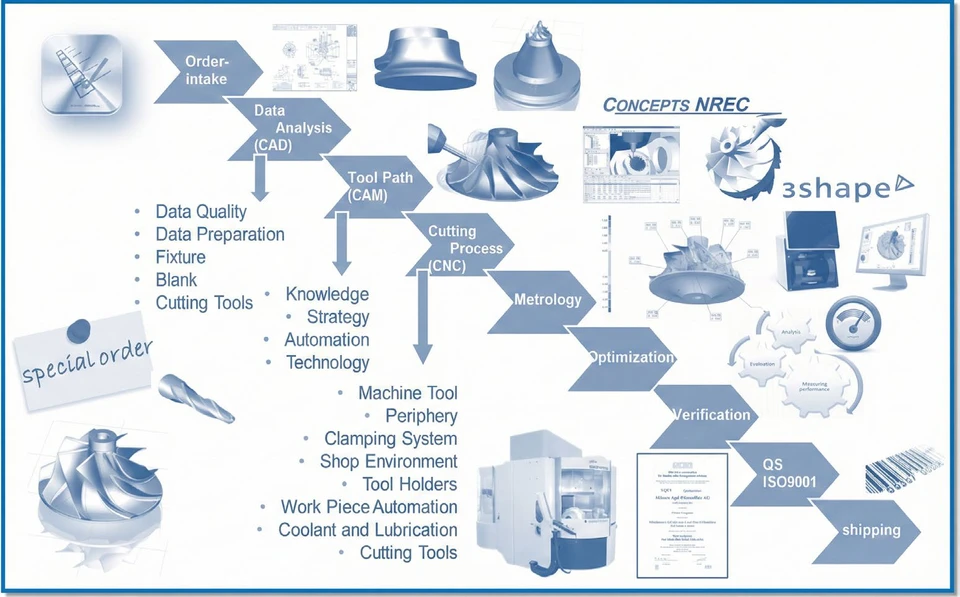
World-class shops institutionalize structured Process Preparation—bringing manufacturing engineers, tool managers, and operators together around a unified digital twin before releasing jobs to the floor.
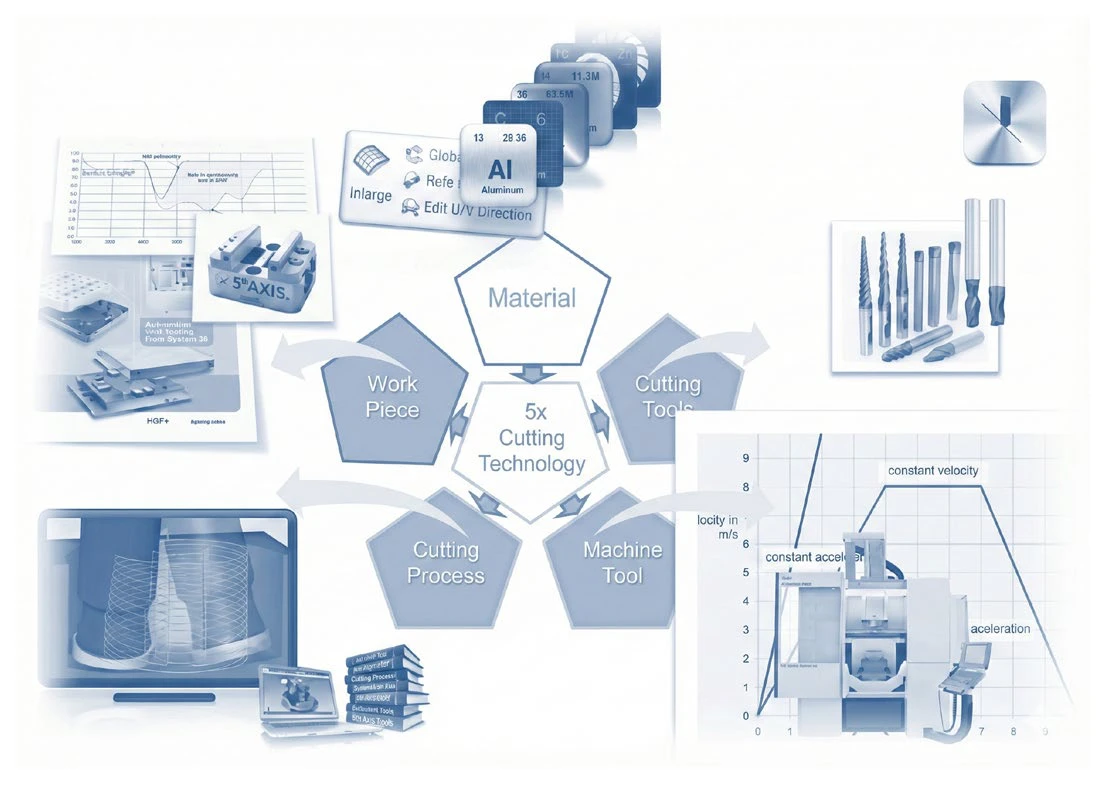
As illustrated in Chapter 6 (p. 53), machining stability rests on four interdependent pillars. Weakness in any single element destabilizes the entire cutting system:
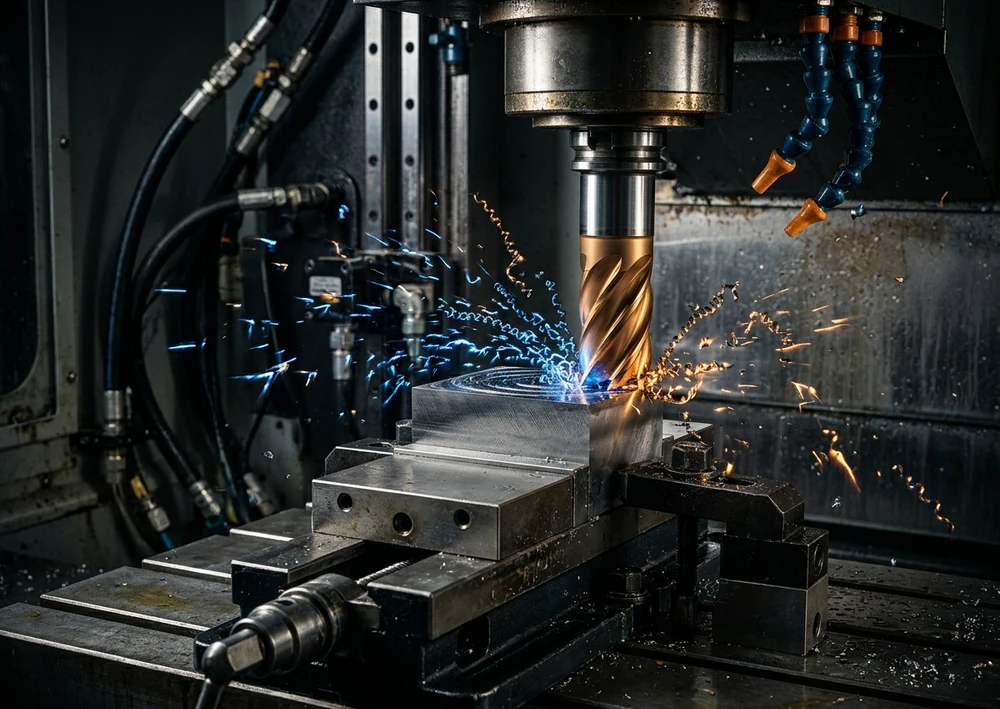
The primary cause of unpredictable tool breakage in conventional offset pocket milling is sudden spikes in radial engagement angle. When a cutter drives into a 90° internal corner, its arc of engagement surges instantaneously toward 180°, causing shock loading, chatter, and thermal cracking of the carbide edge.
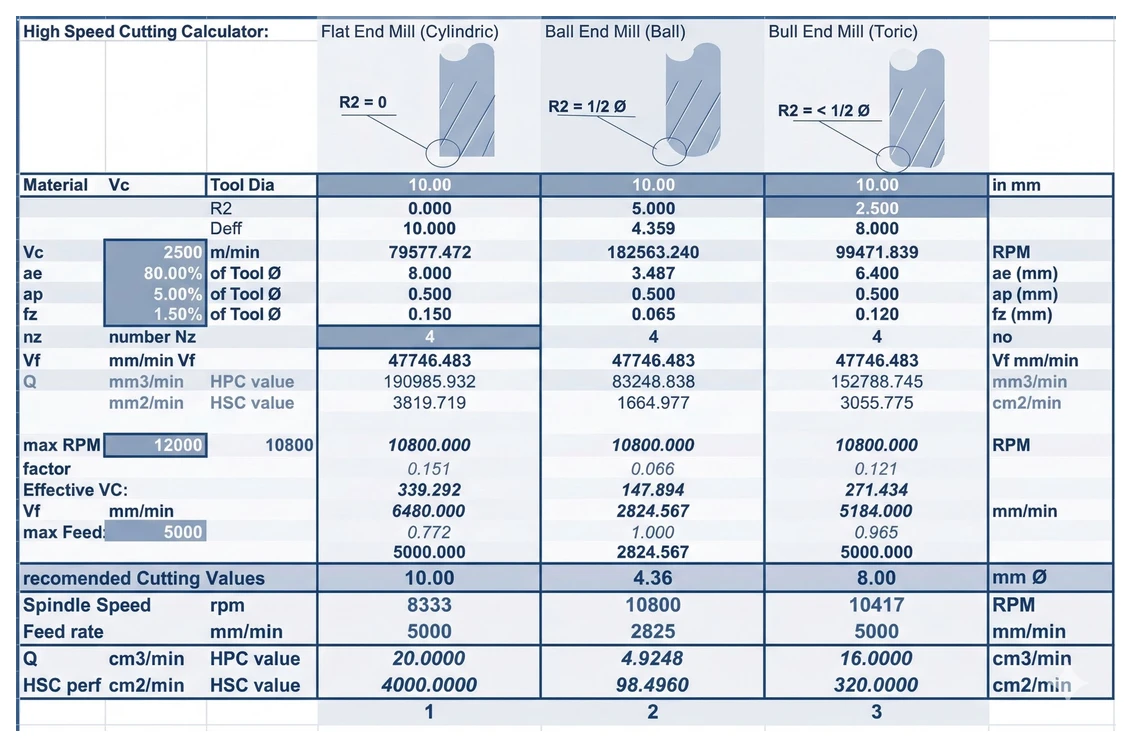
In Appendix A14 (pp. 217–218), Roland Zaugg compares modern High-Dynamic Cutting (HDC / Trochoidal Milling) to “peeling an apple”—a smooth, continuous, spiral motion that keeps the radial engagement angle and mean chip thickness ($h_m$) strictly constant from start to finish:
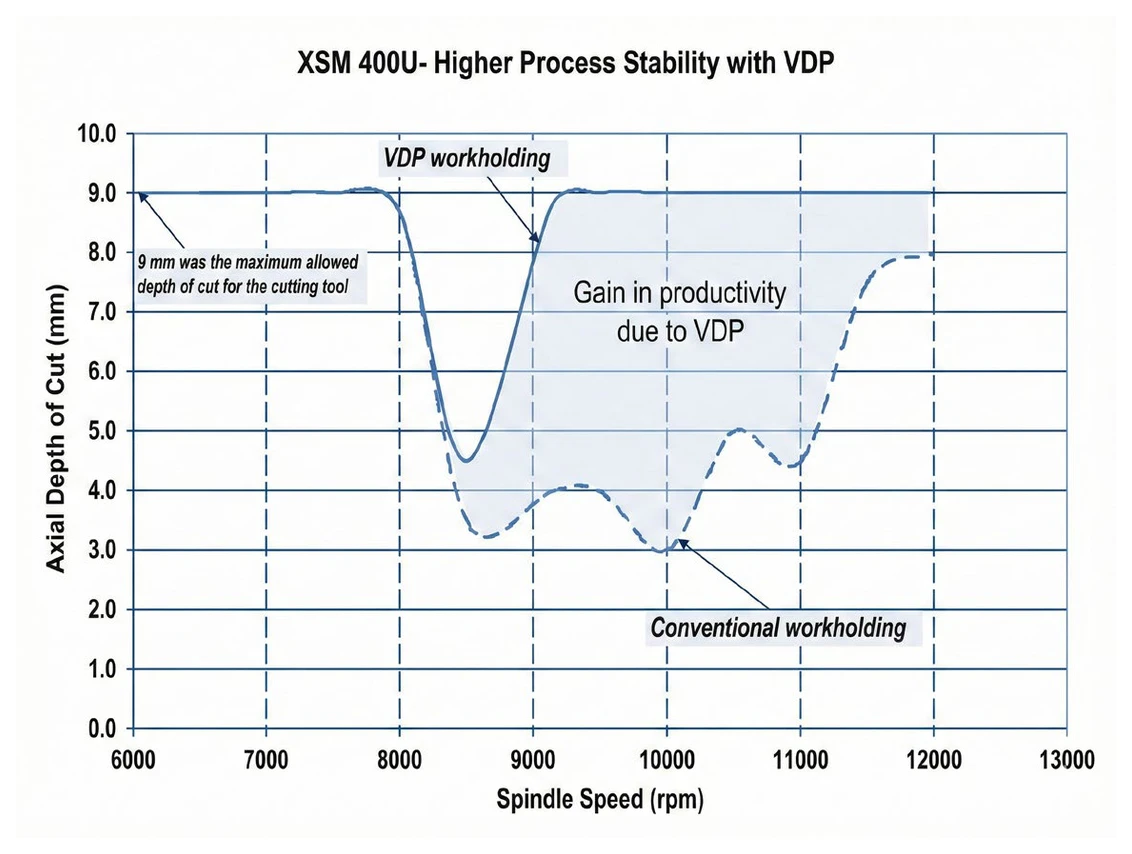
Because 5-axis workholding elevates the workpiece above the rotary platter for 5-sided tool clearance, the fixture stack can act like a tuning fork under intermittent cutting forces. As documented in Chapter 11 (p. 142), integrating Vibration-Damped Workholding (VDP)—which incorporates tuned viscoelastic damping elements directly beneath the zero-point chuck—delivers remarkable, verified gains in process stability:
Finally, mechanical stability must be paired with chemical and thermal stability in the metalworking fluid system (Appendix A13): maintaining emulsion concentration strictly between 6% and 10% via daily refractometer checks and keeping pH within 8.5–9.4 to guarantee consistent lubricity, corrosion protection, and predictable tool life across unattended shifts.
© 2022 Machine Tech Co., Ltd. All Rights Reserved. Web design by 1001click.